
As fertiliser prices rise and supply chains falter, farmers across Africa are facing a stark calculation: plant without fertiliser and risk failure, or absorb costs that may not be recoverable. In some parts of South Africa, that decision is already tipping towards not planting at all.
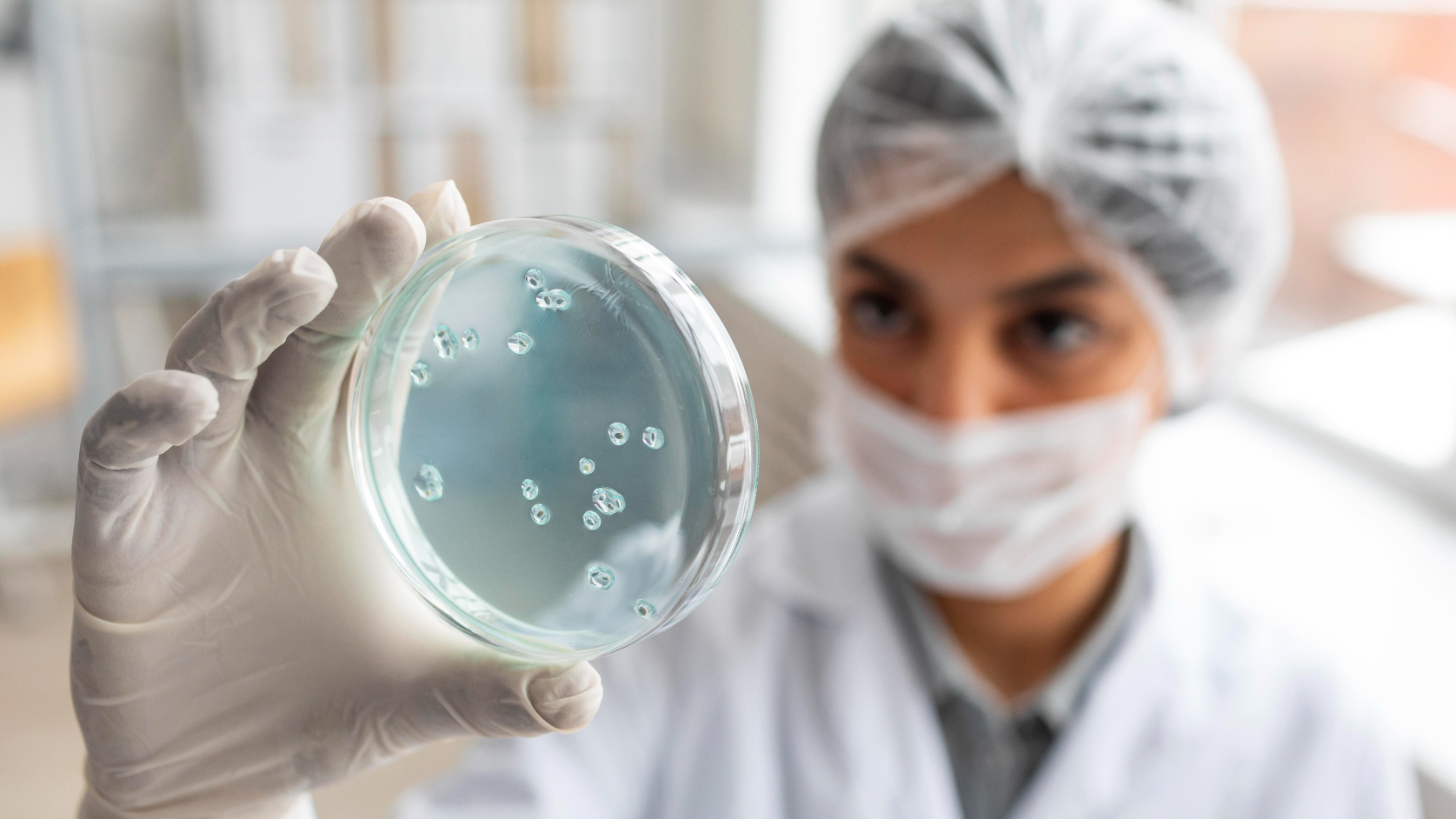
The pressure reflects a deeper structural vulnerability. Many African countries import up to 80–90% of their fertilisers, leaving food production exposed to global energy markets, geopolitical shocks and supply disruptions. In response, researchers are revisiting microbial fertilisers — systems that use bacteria and fungi to improve nutrient uptake — as a potential way to reduce dependence on synthetic inputs. But while early results are promising, soil biology, inconsistent field performance and long development timelines mean these alternatives are unlikely to provide a near-term solution.
“The reality is that most farmers depend heavily on fertilisers to grow crops,” says Karin Jacobs, a professor of microbiology at Stellenbosch University, in South Africa. “And we are already seeing farmers choosing not to plant because fertiliser has become too expensive.”
Recent research shows that strengthening plant–microbe interactions can increase nitrogen uptake and improve resilience under climate stress.1 But translating those findings into real-world farming systems remains a major challenge.
The problem with soil
Unlike chemical fertilizers, which deliver nutrients in predictable quantities, microbial systems depend on living ecosystems. “It’s extremely complex,” says Jacobs. “Just adding a single strain into soil does not do anything. These systems are very contextual. Sometimes they work, and sometimes you just waste your money.”
The variability comes from the soil itself. A single gram can contain billions of microbial cells, representing hundreds to thousands of species. These communities differ across regions, shaped by climate, soil type, crop history, and management practices.
Lise Korsten, co-director of South Africa’s Centre of Excellence in Food Security, says this variability is often underestimated. “There is a tendency to assume these products can be applied in a uniform way,” she says. “But soils are biologically diverse and dynamic systems. What works in one region may not translate to another.”
“Africa’s food systems are highly vulnerable because they rely on inputs that are largely produced elsewhere,” she says. “When those systems are disrupted, farmers have very few immediate alternatives.”
Introducing a new microbial strain into this environment is not straightforward. Even Bacillus species, widely used in commercial bio-fertilisers, can fail to establish themselves once applied. They must compete with native microbes that are already adapted to local conditions.
From lab to field
In controlled environments, microbial fertilisers can perform well, but in open-field conditions, their effectiveness is far less consistent.2 “In pot trials, these things work great,” Jacobs says. “But as soon as you put them in the field, they tend to disappear.” Scale is part of the challenge. Increasing application rates raises costs, making products less accessible to farmers.
Korsten adds that the gap between research and deployment remains significant. “We are seeing promising results in research settings,” she says, “but scaling those solutions into farming systems requires robust field validation across different environments.”
MeerKAT’s sensitivity is central to this new picture. Many of these diffuse structures escaped earlier detection not because they were rare, but because previous instruments lacked the sensitivity to detect them.
Regulation adds further delays. In South Africa, biological fertilisers must undergo multi-year field trials before approval, slowing deployment. For small companies and emerging technologies, these timelines can be prohibitive. The result is a gap between scientific promise and practical adoption.
No quick fix
As fertiliser supply risks grow, the idea that microbial systems could replace synthetic inputs has gained traction. But researchers caution against expecting rapid solutions. “There is no way you can successfully just switch over,” Jacobs says. “Biological fertiliser is not going to cover that. It’s not a replacement.”
Modern crop systems have been built around synthetic inputs. Removing them without changing the system can lead to sharp yield declines. Korsten emphasises that any transition will take time. “These systems need to be developed, tested and adapted locally,” she says. “You cannot expect an immediate solution to a structural problem.”
Practices such as crop rotation, reduced tillage and organic amendments can rebuild soil microbiomes, but these processes unfold over years rather than seasons.3
“The question is not adding microbes,” Jacobs says. “It’s feeding the microbes that are already there.”
Instead of treating soil as a passive medium, research is increasingly focused on managing it as a living system, one where plants and microbes interact to regulate nutrient cycles.
A narrowing window
Africa’s fertiliser dependence is unlikely to disappear in the near term. Microbial fertilisers, while promising, are not yet capable of replacing synthetic inputs at scale. But the pressure to find alternatives is increasing.
As much as the challenge is scientific, it is also very temporal. Building resilient, biologically driven systems takes time, and supply shocks do not allow for time.
For now, microbes may help reduce fertiliser use. But they are not yet ready to carry Africa’s food systems on their own.